
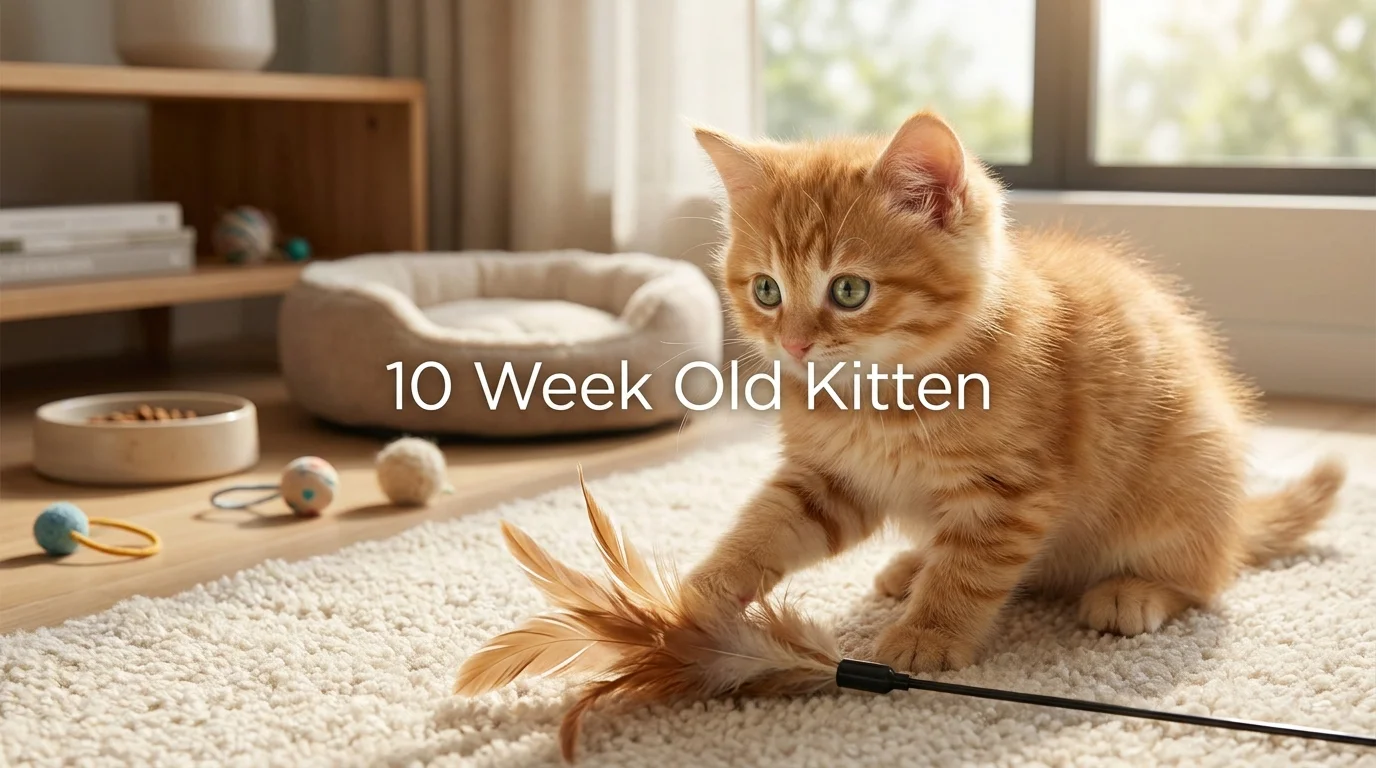
At 10 weeks old, your kitten is past the fragile newborn stage but still has a great deal of growing and learning ahead. Most kittens this age are fully weaned, highly mobile, curious about everything, and capable of using a litter box without much help. That combination of independence and baby-like needs can leave new owners wondering whether their kitten is eating enough, growing normally, sleeping too much, or playing too roughly.
This guide explains what you can reasonably expect from a 10 week old kitten, including feeding, weight, behavior, play, litter habits, vaccinations, parasite prevention, and everyday safety. It focuses on practical care for kittens living in U.S. households while recognizing that veterinary recommendations can vary based on health history, vaccination history, lifestyle, and local laws. Individual kittens also develop at different rates, so use age-based milestones as reference points rather than rigid rules.
Quick Answer: What Should a 10 Week Old Kitten Be Like?
A kitten at this age is usually fully weaned, eating solid kitten food, using the litter box, and moving with confidence. Most need three measured meals a day, frequent short play sessions, a safe indoor setup, and ongoing veterinary care. Their vaccine series is still underway, so they are not yet fully protected.
| At 10 weeks | What to expect |
|---|---|
| Food | Complete and balanced food formulated for growth or all life stages |
| Meals | Usually about three scheduled meals per day |
| Weight | Around 2.7 pounds is one age-reference point, but healthy size varies |
| Teeth | About 26 baby teeth may be present |
| Mobility | Running, climbing, pouncing, jumping, and exploring confidently |
| Litter box | Most kittens should be using it reliably |
| Behavior | High-energy play mixed with long periods of rest |
| Vaccines | Kitten vaccine series is normally still in progress |
| Parasites | Deworming history and ongoing prevention should be reviewed with a veterinarian |
| Training | Ideal time to reinforce scratching, carrier use, handling, and appropriate play |
What Does a 10 Week Old Kitten Look Like?
A kitten at this age usually looks much more like a miniature adult cat than a newborn. The ears are fully upright, the body is coordinated enough for running and climbing, and eye color may already resemble the kitten’s adult color. Alley Cat Allies also notes that a 10-week-old kitten commonly has all 26 deciduous, or baby, teeth.
Alley Cat Allies uses roughly 2.7 pounds as a reference weight when estimating the age of a typical 10-week-old kitten, but that figure should not be treated as a required target. Breed, sex, birth size, nutrition, health history, and individual growth rate can all influence how much a healthy kitten weighs. A steady upward growth pattern, appropriate body condition, normal appetite, and good energy when awake are generally more useful than trying to match one exact number.
If you want to monitor development at home, weigh your kitten periodically on the same scale and record the result rather than judging growth by appearance alone. A sudden plateau or weight loss deserves more attention than simply being smaller than another kitten of the same age. Your veterinarian can assess body condition and determine whether the kitten’s individual growth pattern is appropriate.
How Much Should a 10 Week Old Kitten Eat?
A growing kitten should eat food whose nutritional adequacy statement says it is complete and balanced for growth or appropriate for all life stages. The United States Food and Drug Administration explains that foods carrying a complete-and-balanced claim must meet an AAFCO nutrient profile or satisfy an appropriate AAFCO feeding trial. Adult-maintenance food is designed for different nutritional requirements, so it should not normally be used as the sole diet for a growing kitten.
By 10 weeks, kittens are normally fully weaned and able to eat solid food without kitten milk replacer. Cornell University’s Feline Health Center says kittens generally do best with three meals per day until about six months of age because growing cats require more food per pound of body weight than adults. Wet food, dry food, or a combination can be appropriate when the total diet is complete, balanced, and suitable for growth.
There is no single cup or can measurement that works for every kitten because foods vary greatly in calorie density. Start with the feeding directions for your kitten’s current weight and life stage, divide the daily amount among meals, and adjust as your veterinarian recommends based on growth and body condition. AAFCO specifically notes that package feeding directions are guidelines and may need to be modified for an individual animal.
A Simple Feeding Checklist
- Choose food labeled for growth or all life stages.
- Divide the appropriate daily amount into roughly three meals.
- Keep clean, fresh water available at all times.
- Measure portions instead of repeatedly topping up an unmeasured bowl.
- Introduce a new food gradually rather than making a sudden switch.
- Use treats sparingly so they do not replace balanced kitten nutrition.
- Ask your veterinarian for an individualized feeding target if growth seems unusually fast or slow.
A Practical Daily Routine for a 10-Week-Old Kitten
Kittens do not need a minute-by-minute timetable, but predictable meals, play, and quiet periods can make a new home easier to understand. At this age, intense bursts of activity are commonly followed by substantial periods of rest, so a kitten can appear wildly energetic and then suddenly fall asleep. A flexible routine also helps you notice meaningful changes in appetite, activity, stool, or litter-box use.
| Approximate time | Activity |
|---|---|
| Morning | Meal, fresh water, litter check, short interactive play |
| Late morning | Rest and independent exploration |
| Midday | Meal followed by gentle play or handling practice |
| Afternoon | Rest, climbing, scratching, and supervised exploration |
| Evening | Meal and an active wand-toy session |
| Before bed | Litter check, quieter play, and a comfortable sleeping area |
Your household schedule does not have to match this example exactly. What matters more is giving the kitten enough opportunities to eat, play appropriately, explore, use the litter box, and rest without constant disturbance. If you leave dry food available for part of the day, measuring the total daily portion can still help you monitor how much is actually being eaten.
Is a 10 Week Old Kitten Supposed to Be So Hyper?
Running through the house, stalking ankles, ambushing toys, climbing furniture, wrestling, pouncing, and suddenly changing direction are all common behaviors in young kittens. Play allows a kitten to rehearse natural predatory behaviors while developing coordination and learning how strongly to bite or grab. High activity by itself is therefore usually less concerning than a sudden loss of a kitten’s normal interest in play.
Play-biting deserves attention now because habits formed with tiny teeth can become painful when the cat is larger. The Feline Veterinary Medical Association advises caregivers not to use their hands or feet as toys and recommends redirecting hunting behavior toward wand toys or other objects. Short interactive sessions at least a couple of times daily can provide an appropriate outlet without teaching the kitten that human skin is prey.
Punishing normal kitten behavior with shouting, hitting, chasing, or spray bottles can create fear without teaching the kitten what you want instead. A better approach is to interrupt access to the unwanted target, immediately offer an appropriate alternative, and reward the behavior you want repeated. Positive reinforcement is especially useful for scratching-post use, carrier training, gentle handling, and redirecting play.
Training and Socialization at 10 Weeks
The most sensitive early socialization period occurs roughly between two and nine weeks, but learning certainly does not stop when a kitten reaches 10 weeks. Newly homed kittens still benefit from calm, positive exposure to household routines, different people, grooming tools, carriers, handling, and normal sounds. Experiences should be gradual enough that the kitten remains curious rather than frightened or overwhelmed.
This is also an excellent age to make nail handling, brushing, mouth checks, and veterinary travel feel ordinary. Feline veterinary guidance recommends positive early exposure to procedures such as nail trimming, combing, ear handling, and dental care because familiar experiences can reduce stress later. Keep sessions brief, pair them with food or play, and stop before the kitten becomes frustrated.
Leave the carrier accessible at home instead of storing it until a vet appointment. Add comfortable bedding, occasionally place treats or toys inside, and allow the kitten to enter without being pushed or chased. FelineVMA guidance specifically recommends carrier acclimation because a carrier that already feels familiar can make future veterinary trips less stressful.
Vaccines and Vet Care at 10 Weeks
A healthy-looking kitten still needs veterinary care because its vaccination series is normally incomplete at 10 weeks. AAHA and AAFP guidance recommends administering the combination vaccine that protects against feline panleukopenia, herpesvirus, and calicivirus at intervals of roughly three to four weeks until a kitten reaches at least 16 to 20 weeks, depending on the protocol used. Repeated doses are necessary partly because maternal antibodies can interfere unpredictably with earlier vaccinations.
Feline leukemia virus vaccination is considered a core vaccination for kittens and young cats under 1 year of age in current AAHA/AAFP guidance. The kitten series can begin as early as eight weeks for appropriate products, with a second dose typically given three to four weeks later. Rabies vaccination timing depends on the vaccine label and applicable state or local law, so your veterinarian should establish the schedule for your location.
Do not assume that receiving one early vaccine means a kitten is fully protected against infectious disease. Until your veterinarian says the initial series is complete, use extra care around cats with unknown vaccination histories and in areas where infectious animals may have been present. The AVMA specifically recommends limiting exposure to potentially infected cats and separating a newly introduced kitten from resident cats until an appropriate veterinary examination and preventive care have been completed.
Deworming, Fleas, and Parasite Prevention
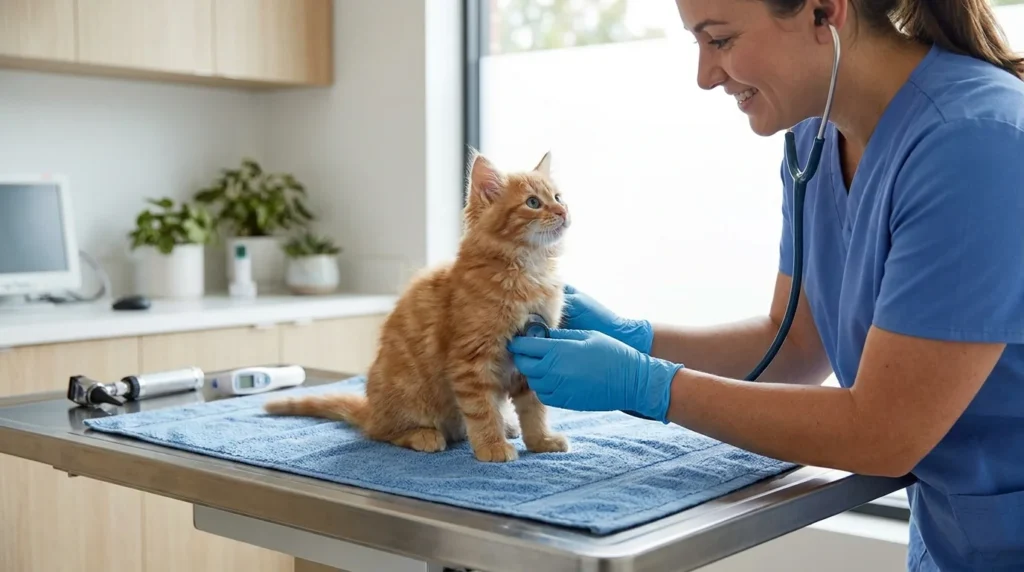
Intestinal parasites are common enough in young kittens that parasite control should be part of the first veterinary visits. The Companion Animal Parasite Council recommends beginning routine roundworm deworming in kittens at two weeks, repeating treatment every two weeks through the early kitten period, and then transitioning to an appropriate monthly preventive product. A 10-week-old kitten’s veterinarian should therefore review what treatments have already been given and what prevention is appropriate going forward.
Do not automatically use a flea, tick, or deworming product simply because it is available over the counter. Minimum ages, minimum weights, active ingredients, parasite coverage, and dosing vary by product, so the correct choice depends on the individual kitten. Products intended for dogs can also be dangerous to cats, making species-specific labeling and veterinary guidance especially important.
If a newly adopted kitten develops persistent loose stools, consider contacting the veterinarian to ask whether a fresh stool sample should be tested. VCA notes that fecal testing can identify worms and other parasites and advises prompt veterinary evaluation when diarrhea occurs with lethargy, vomiting, refusal to eat, or blood in the stool. Young kittens have less reserve than healthy adults, so worsening gastrointestinal signs deserve attention rather than prolonged home treatment.
Litter Box Habits at 10 Weeks
Most kittens should be capable of using a litter box reliably by 10 weeks, although occasional mistakes can happen after moving into an unfamiliar home. Make the correct choice easy by placing a clean box somewhere accessible and quiet, especially while the kitten is still learning the layout of the house. In a larger home, having more than one accessible location can prevent a small kitten from having to travel too far when the urge is sudden.
Repeated accidents should not automatically be treated as a training problem. Diarrhea, urinary discomfort, stress, poor box placement, difficult access, or an unsuitable litter setup can all contribute to elimination outside the box. If a previously reliable kitten suddenly changes bathroom habits, look for the cause rather than punishing the behavior.
Clean accidents with an appropriate odor-removing cleaner and continue offering calm access to the box. Never rub akitten’ss nose in an accident or frighten it near the litter area, because that can create a negative association with elimination. Consistent setup and positive experiences generally teach more effectively than punishment.
How to Kitten-Proof Your Home
A confident 10-week-old kitten can reach more places than many new owners expect. Climbing, chewing, squeezing behind furniture, batting objects from shelves, and investigating plants are all normal exploration behaviors. Kitten-proofing should therefore assume that anything dangling, rolling, breakable, chewable, or small enough to swallow may eventually attract attention.
Pay particular attention to these hazards:
- Secure electrical cords and blind cords.
- Put medications and household chemicals behind closed doors.
- Remove loose string, yarn, ribbons, thread, and easily swallowed toy pieces.
- Check recliners, dryers, washers, and closets before closing or operating them.
- Secure windows and damaged screens.
- Keep human food and trash inaccessible.
- Remove toxic plants, especially true lilies.
- Never apply a dog flea medication to a kitten.
- Offer stable scratching surfaces and safe climbing options instead of trying to prevent all climbing.
Lilies deserve special attention because Cornell warns that even tiny ingested amounts can cause life-threatening kidney failure in cats. Human medications and flea treatments intended for dogs can also be acutely toxic to cats, so accidental exposure should prompt an immediate call to a veterinarian or an animal poison control service. Do not induce vomiting unless a veterinary professional specifically tells you to do so.
Bringing a 10 Week Old Kitten Into a New Home
A newly adopted kitten may be outgoing within minutes or may initially hide, cry, cling, or hesitate to eat in an unfamiliar environment. Start with a manageable space containing food, water, a litter box, hiding options, bedding, scratching surfaces, and safe toys rather than immediately giving unrestricted access to an entire house. Gradually expanding territory can make it easier for the kitten to learn where essential resources are located.
If other cats already live in the home, avoid assuming the animals will sort out introductions on their own. FelineVMA resources recommend a transition area for the newcomer and gradual, supervised introductions so that cats do not immediately compete over important resources. A veterinary examination early in the process can also reduce the risk of unknowingly exposing resident cats to illness or parasites.
Once your kitten begins settling in, predictable, positive interactions matter more than constant attention. Give the kitten opportunities to approach you, play, explore independently, and sleep undisturbe,drather thanf repeatedly picking it up whenever it is visible. For more pet ownership and animal-care reading, you can also explore InRockry’s Pets section.
When Should You Worry About a 10 Week Old Kitten?
Kittens can deteriorate more quickly than healthy adult cats, so an obvious change from yokitten’sn’s normal pattern deserves attention. Refusing food, repeated vomiting, significant diarrhea, unusual weakness, persistent lethargy, weight loss, or blood in vomit or stool are reasons to contact a veterinarian rather than simply waiting several days. VCA specifically advises prompt veterinary care when a kitten with diarrhea is also lethargic, vomiting, refusing food, or passing blood.
Some signs warrant emergency evaluation rather than a routine appointment. Cornell lists difficulty breathing, collapse, pale or blue gums, seizures, inability to urinate, serious trauma, major bleeding, severe vomiting, and bloody severe diarrhea among emergency conditions. Suspected poisoning is also urgent, even if the kitten has not yet begun showing obvious symptoms.
You know the kitten’s usual behavior better than an age chart does, so a meaningful change from that pattern matters. A kitten that normally races toward food but suddenly refuses it while hiding and acting weak is more concerning than a kitten that takes an unusually long nap after playing. When you are unsure whether a young kitten needs immediate care, calling your veterinary clinic for triage advice is safer than guessing.
Helping Your Kitten Grow Into a Healthy Cat
A 10-week-old kitten should be curious, increasingly coordinated, fully weaned, and eager to practice behaviors that will eventually become adult cat behaviors. Your job during this stage is less about controlling all that energy and more about directing it toward balanced nutrition, safe play, positive training, preventive veterinary care, and a secure home. Pay attention to your individual kitten’s normal appetite, weight trend, energy, stool, and behavior, because changes in those patterns can tell you more than an age chart alone.
The weeks ahead will bring rapid physical and behavioral change, so routines established now can make later care considerably easier. Feed an appropriate growth diet, continue the veterinarian-directed vaccine and parasite plan, teach that hands are not toys, and make the carrier, litter box, scratching surfaces, and gentle handling part of ordinary life. When something seems medically wrong, contact a veterinarian promptly rather than assuming every change is simply part of growing up.
Frequently Asked Questions
How Much Should a 10 Week Old Kitten Weigh?
About 2.7 pounds is one commonly used age-estimation reference for a typical 10-week kitten, but healthy kittens do not all weigh the same amount. Breed, sex, nutrition, health, and individual growth patterns can produce meaningful differences. Your veterinarian should evaluate overall body condition and growth trend rather than relying on one target weight.
How Often Should a 10 Week Old Kitten Eat?
Three scheduled meals per day is a practical starting point for most kittens at this age. Cornell recommends three daily meals for kittens until around six months, because young cats need more nutrition relative to their body weight than adults do. The amount per meal depends on the food’s calorie density, the kitten’s weight, and the feeding directions for that product.
Can a 10 Week Old Kitten Eat Only Dry Food?
Dry kitten food can provide complete nutrition when its nutritional adequacy statement confirms that it is complete and balanced for growth or all life stages. Wet food can also provide complete nutrition, and many households successfully use both textures. Whatever format you choose, provide fresh water and monitor the kitten’s growth, appetite, stool quality, and overall condition.
Is Biting Normal for a 10 Week Old Kitten?
Play biting is common because kittens naturally practice stalking, grabbing, wrestling, and pouncing. Avoid encouraging the behavior by wrestling with your hands or allowing the kitten to chase fingers and toes. Redirect the kitten to wand toys, tossable toys, or another appropriate play object so hunting behavior has a safe outlet.
Should a 10 Week Old Kitten Already Be Vaccinated?
A kitten may have received one or more vaccinations by 10 weeks, but the primary series is usually not finished yet. AAHA/AAFP recommendations call for repeated core kitten vaccinations through at least 16 to 20 weeks because maternal antibodies can interfere with earlier doses. Ask your veterinarian to review the kitten’s written vaccine records and create the remaining schedule.
Can I Leave a 10 Week Old Kitten Alone?
A kitten this young can spend some periods without direct human interaction, especially while sleeping, but the environment must be thoroughly kitten-proofed. The kitten still needs regular meals, water, access to litter, play, social interaction, and daily observation for any health changes. Longer absences require more planning than they would for a healthy adult cat because a young kitten eats more frequently and can get into trouble quickly.
When Should a 10 Week Old Kitten Be Spayed or Neutered?
Ten weeks is a good time to discuss the plan even when surgery will happen later. The Feline Veterinary Medical Association supports spaying or neutering cats not intended for breeding by five months of age and notes that reproductive activity may begin as early as four to five months. The veterinarian should still determine individual timing based on the kitten’s health and circumstances.


