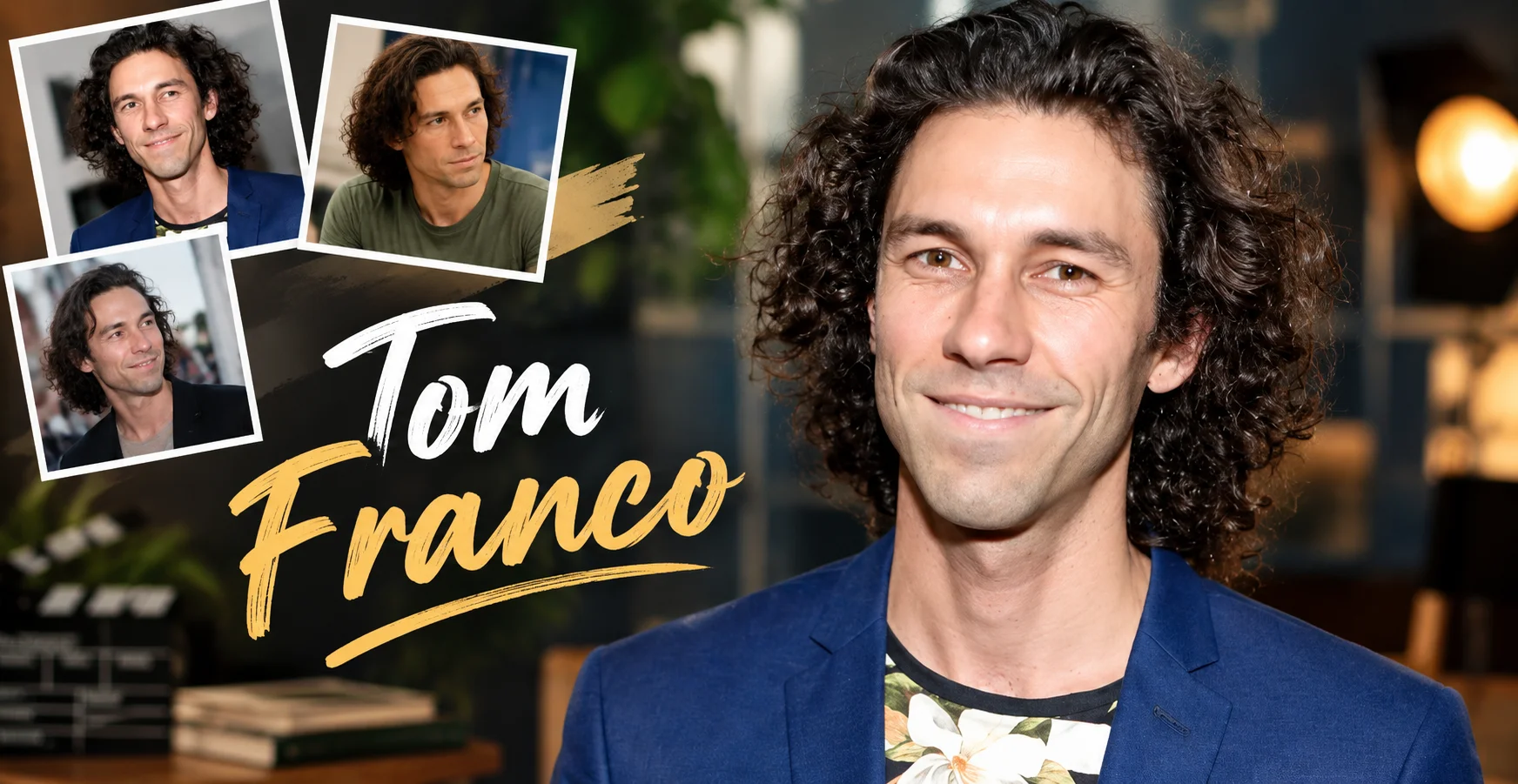
Tom Franco has built a creative career that looks different from his famous brothers’. He is primarily a visual artist, sculptor, painter, and arts organizer rather than a Hollywood actor. His work centers on collaboration, found materials, public art, and the artist community he helped create in California. More from us: Tom Brady Wife.
Direct answer: Tom Franco is an American visual artist, sculptor, painter, and community arts organizer from Palo Alto, California. Born April 14, 1980, he is the middle brother of actors James and Dave Franco. His career centers on collaborative art and leadership of the Berkeley-based Firehouse Art Collective, with acting as a smaller part of his work.
Key Facts
| Fact | Details |
|---|---|
| Full name | Thomas Andrew Franco |
| Date of birth | April 14, 1980 |
| Age in September 2026 | 46 |
| Birthplace | Palo Alto, California, United States |
| Main work | Visual artist, sculptor, painter, arts organizer, actor, and producer |
| Education | Fine art at UC Santa Cruz; later studied ceramics at California College of the Arts |
| Brothers | James Franco and Dave Franco |
| Arts organization | Firehouse Art Collective |
| Current spouse | Iris Torres |
| Notable film connection | \The Disaster Artist\ and other independent projects |
Key Takeaways
- Franco’s main professional identity is visual art, not acting.
- He has developed a collaborative style using sculpture, painting, ceramics, and found objects.
- Firehouse Art Collective has become a major part of his career and community work.
- James and Dave are his brothers, but his professional path developed largely outside mainstream Hollywood.
- Public net-worth figures about him are estimates, not audited financial facts.
Research note: This profile uses current first-party art pages, university material, film credits, and established entertainment reporting. Financial estimates are identified separately from verified biographical facts.
Who Is Tom Franco and Why Is He Known?
The artist was born in Palo Alto and grew up as the middle of three brothers in a creative household. His parents had backgrounds in painting, while his mother, Betsy Franco, also became known as a writer. That environment gave all three brothers early exposure to art, although each eventually followed a different professional direction.
James, the eldest brother, became known for acting, directing, writing, and art, while Dave developed his own acting and directing career. The middle brother placed visual art and creative communities at the center of his work. That distinction explains why audiences familiar with the Franco surname may know less about him than his siblings.
Early Life and Art Education
Franco attended school in Palo Alto before studying fine art at the University of California, Santa Cruz. The university says he graduated in 2002 after studying fine art and sculpture. He later attended California College of the Arts in Oakland, where ceramics became another major part of his artistic development.
His education also helped shape his interest in making art with other people. Rather than building a practice based only on solitary studio work, he gravitated toward shared creative projects. That preference eventually became central to both his personal artwork and his work with artist communities.
What Kind of Art Does He Make?
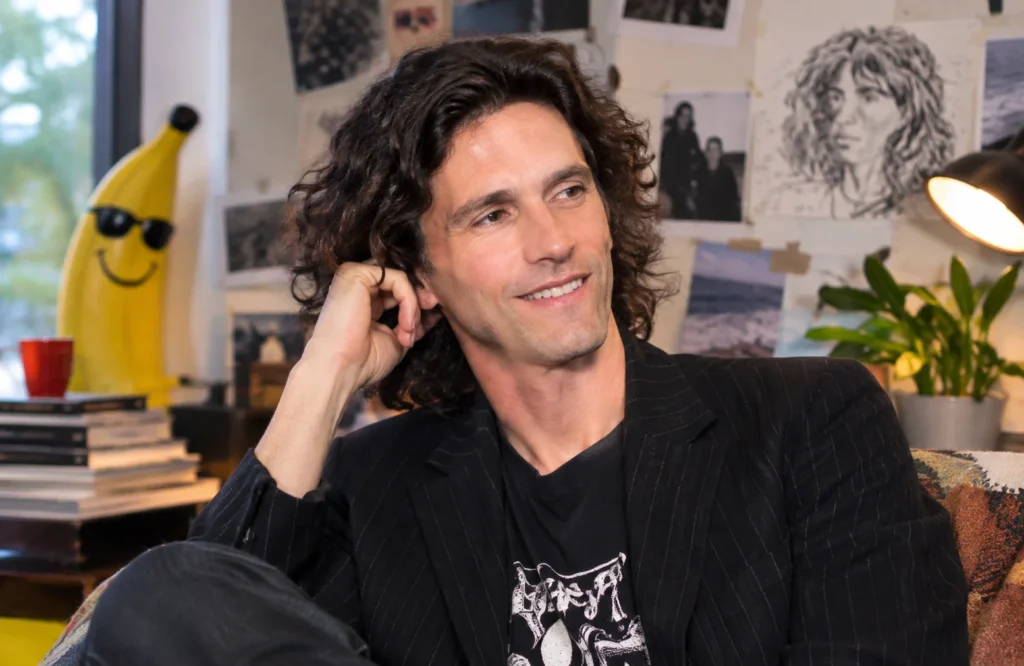
His official artist statement describes a practice built heavily around discarded and repurposed objects. He says roughly 80 percent of his materials are found items, including painting surfaces and objects incorporated into sculptures. He also describes himself as a folk artist whose imagery draws partly from California and the Bay Area.
Collaboration is another defining feature of the work. His paintings, sculptures, installations, murals, and narrative projects often involve other artists rather than a single creator. Museum coverage has also presented his work through themes of identity, community, storytelling, and shared creative production.
Firehouse Art Collective Became His Long-Term Project
Firehouse Art Collective began in 2004 after artists connected through their college community and sought shared working space. Franco was among its founders and later became its sole director. The organization describes its purpose as providing spaces where artists can work together and build community around their creative practices.
The collective has expanded well beyond its first South Berkeley location. Its current website lists art spaces in Berkeley, Point Richmond, and Reno, including studios and gallery-oriented projects. That continuing network shows why his role as an arts organizer matters as much as individual paintings or sculptures when assessing his career.
His Relationship With James and Dave Franco
The three brothers grew up in the same artistic household, but their public careers took different paths. James and Dave became much more visible through film, while their middle sibling concentrated on visual work and community arts. People magazine has described all three as maintaining creative interests despite their different paths.
Family connections have still produced collaborations. James and his brother worked together on the large ceramic Pipe Brothers project, which involved Mission Clay and Arizona State University’s Ceramics Research Center. All three siblings also appeared in The Disaster Artist, giving audiences a rare film project connecting their professional worlds.
A famous relative can sometimes overshadow a person’s independent career. InRockry explores a similar distinction between family attention and individual work in its Pilar Sanders profile. In this case, the artist’s long-running community projects provide a clear professional identity beyond his surname.
Acting and Film Work
Acting has remained a secondary part of his career, but his screen credits stretch across several decades. IMDb lists work including The Disaster Artist, Miracle Valley, and Fractured, along with producing and directing credits. It also lists him as a producer on the 2026 project Run Amok.
His appearance in The Disaster Artist is the film connection most likely to be familiar to mainstream audiences. The project starred James and Dave, while their brother played Karl in a smaller role. Readers interested in another performer-focused career history can see InRockry’s Susan Dey career profile.
Wife, Marriage, and Personal Life
IMDb currently lists Franco as married to Iris Torres and previously married to Julia Lazar Franco. A wedding page for Iris and her husband records a May 2021 virtual ceremony connected with Oakland. Firehouse material also identifies Iris Torres Franco as a producer involved with film projects linked to the collective.
Julia Lazar was both his partner and an important collaborator in the arts community. IMDb records their marriage on July 28, 2014, and her death on August 25 of that year. Coverage from the period also documented their creative connection before her death.
For readers interested in how public relationships intersect with independent careers, InRockry also covers the subject through profiles such as Arleen Sorkin’s life and entertainment career. A careful biography should separate those personal details from the work that established a person’s professional record.
What Is His Net Worth?
No publicly available audited financial statement establishes an exact personal fortune. Celebrity Net Worth currently estimates it at about $500,000, but that figure comes from a commercial celebrity-wealth website. Treat it as an estimate rather than a verified balance sheet.
This distinction matters because an artist’s exhibitions, property, business interests, production credits, and collective activities are difficult to value from public information. Revenue connected with an organization also does not automatically equal the director’s personal wealth. InRockry applies the same evidence-first distinction in its Andrew Tate net-worth analysis, separating documented figures from third-party estimates.
Why His Career Stands Apart
The simplest way to understand his career is to view it through three connected tracks rather than through celebrity status alone. Visual art remains the foundation, Firehouse provides the community-building component, and film represents a smaller creative outlet. That combination gives his public career a structure that differs sharply from his actor brothers’.
| Career track | Main role | Examples |
|---|---|---|
| Visual art | Primary creative work | Sculpture, painting, found-object art, ceramics, murals |
| Arts community | Long-term organizational work | Firehouse Art Collective, studios, exhibitions, collaborative projects |
| Film | Secondary creative work | Acting, producing, directing, \The Disaster Artist\, \Run Amok\ |
Frequently Asked Questions
How old is Tom Franco?
He was born on April 14, 1980, in Palo Alto, California. That makes him 46 years old as of September 2026. His birth date appears in his current IMDb biography.
Is he an actor?
Yes, but acting is only one part of his professional record. IMDb lists acting, producing, and directing credits across film and video projects. His visual-art practice and Firehouse leadership remain more central to his public work.
Is he related to James and Dave Franco?
Yes, he is the middle of the three Franco brothers. James is the eldest, while Dave is the youngest. The siblings have occasionally worked together despite developing distinct careers.
What is the Firehouse Art Collective?
It is an artist-run network that grew from a shared creative community established in 2004. Its spaces support studio work, collaboration, exhibitions, and other arts projects. The organization’s current site lists locations in California and Nevada.
Who is he married to now?
Current IMDb information lists Iris Torres as his spouse. Their wedding page documents a 2021 ceremony connected with Oakland. He was previously married to artist and collaborator Julia Lazar Franco, who died in 2014.
If you enjoy researched profiles that separate verified facts from online speculation, browse InRockry’s entertainment coverage for more biographies and career timelines. The strongest part of this story is not the familiar family name but the long commitment to collaborative art and community spaces. That work explains why his career deserves to be understood on its own terms.